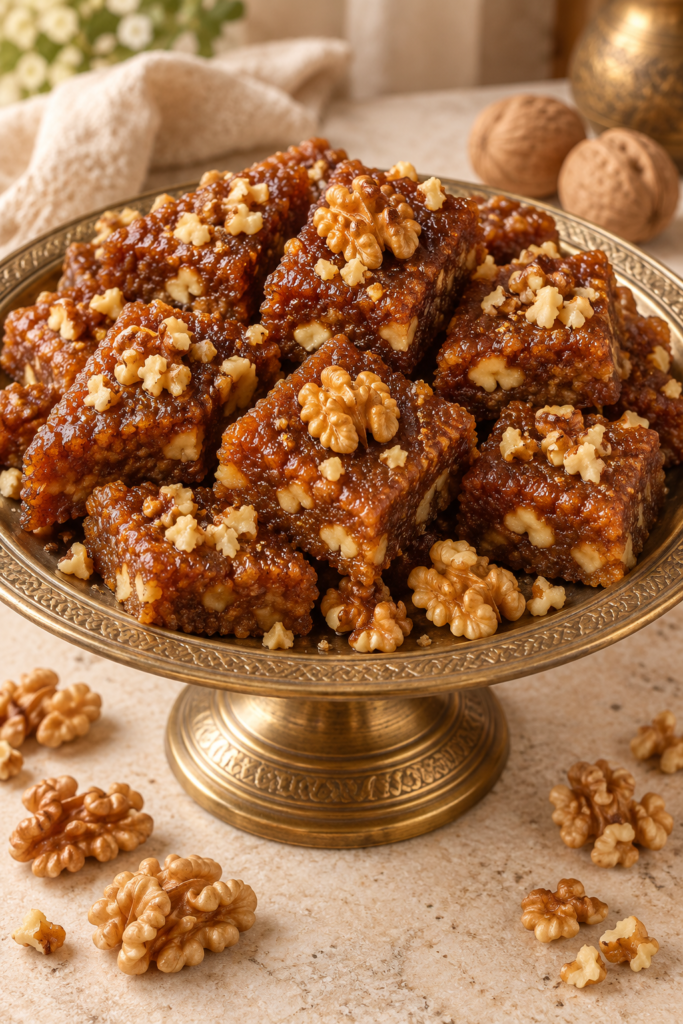
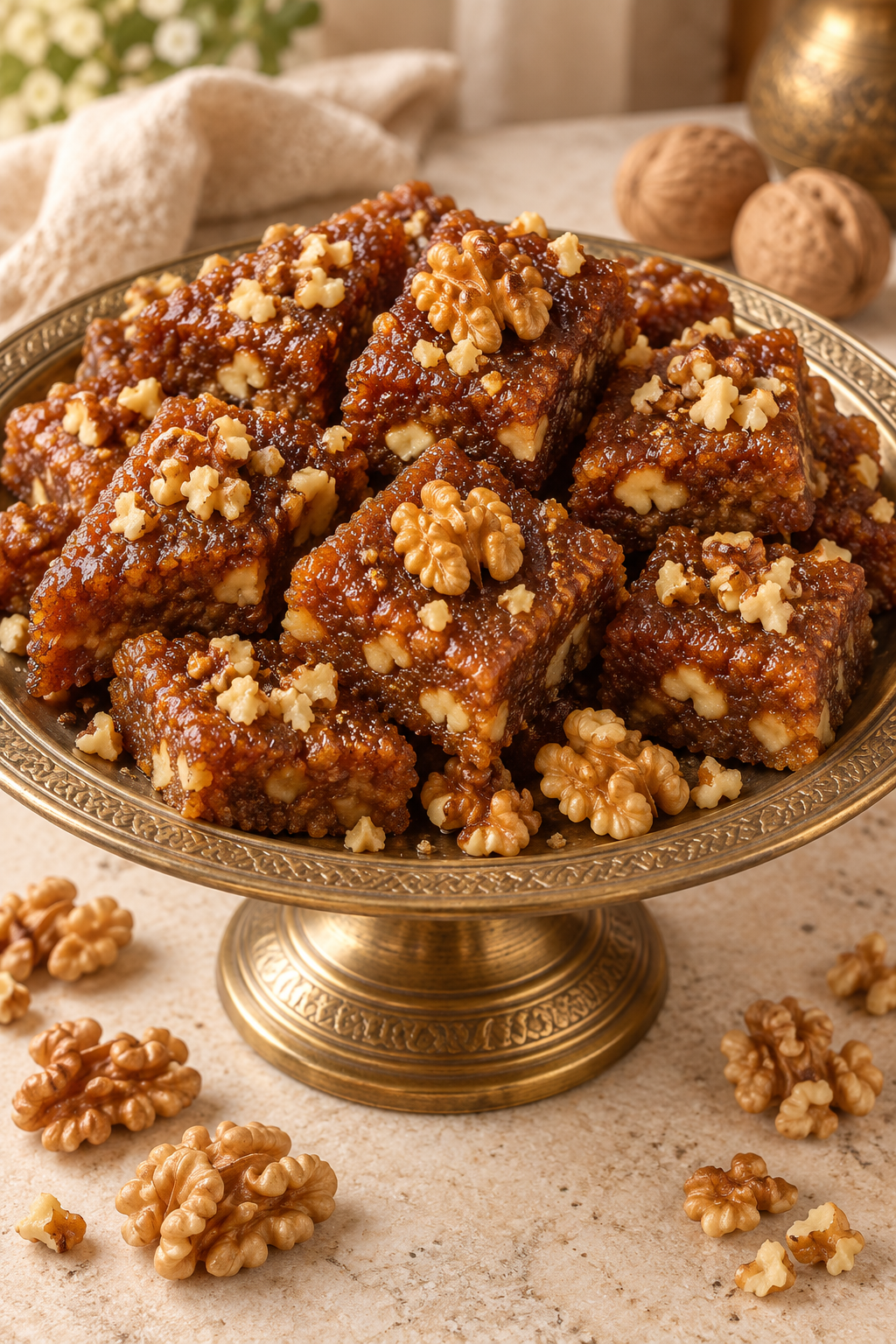
This rich and comforting Walnut Halwa is made with chopped walnuts, milk powder, condensed milk, eggs, desi ghee and cardamom. It has a soft, moist and slightly grainy texture with delicious walnut pieces in every bite.
Walnuts give this traditional-style dessert its distinctive nutty flavour, while condensed milk adds sweetness and richness without requiring additional sugar. Serve it warm as a soft halwa or allow it to set slightly before serving.
Why You’ll Love This Recipe
- Rich, warm and comforting winter dessert
- Packed with the flavour and texture of walnuts
- Sweetened entirely with condensed milk
- Made without flour or semolina
- Requires only six basic ingredients
- Can be served warm or at room temperature
- Perfect for family gatherings and special occasions
Ingredients You’ll Need
Walnuts
Use fresh walnuts for the best flavour. Roughly chop them so you can still enjoy small walnut pieces throughout the halwa. Reserve a few walnut halves or chopped walnuts for garnishing.
Desi Ghee
Desi ghee gives the halwa its traditional richness and aroma. It also prevents the milk powder and egg mixture from sticking to the pan.
Full-Cream Milk Powder
Full-cream milk powder forms the creamy base of this halwa. Frying it gently in ghee develops a deeper, slightly caramelised flavour.
Condensed Milk
Sweetened condensed milk provides both sweetness and a creamy texture. No additional sugar is required.
Eggs
Lightly beat the eggs before adding them. They must be cooked over low heat while stirring continuously so they blend smoothly into the halwa instead of forming large egg pieces.
Cardamom Powder
Cardamom adds a warm and delicate fragrance that complements the walnuts and desi ghee.
How to Make Walnut Halwa
1. Prepare the Ingredients
Roughly chop the walnuts and reserve a small amount for garnishing. Lightly beat the eggs in a separate bowl and keep all the other ingredients ready.
2. Warm the Ghee
Place a heavy-bottomed pan or kadai over low heat. Add the desi ghee and cardamom powder. Warm gently for about 30 seconds, taking care not to burn the cardamom.
3. Roast the Milk Powder
Add the full-cream milk powder to the warm ghee. Cook over low heat for approximately 5 minutes, stirring continuously.
The milk powder should become lightly golden and aromatic. Do not cook it over high heat because it can burn quickly.
4. Add the Eggs
Reduce the heat to its lowest setting. Gradually pour in the lightly beaten eggs while stirring continuously.
Mix quickly and thoroughly so the eggs combine evenly with the milk powder. Continue cooking and stirring until the mixture becomes smooth, grainy and golden brown.
5. Add the Condensed Milk
Pour in the condensed milk and mix well. Continue cooking over low heat for 3–5 minutes, stirring constantly.
The halwa is ready when it becomes thick, glossy and starts leaving the sides of the pan.
6. Add the Walnuts
Add the chopped walnuts and cook for another 1–2 minutes, stirring gently so they are distributed evenly throughout the halwa.
Remove the pan from the heat.
7. Garnish and Serve
Transfer the walnut halwa to a serving dish while it is still warm. Garnish with reserved chopped walnuts or walnut halves.
Serve it warm for a soft, spoonable texture, or let it rest for 15–20 minutes if you prefer a firmer halwa.
Bushra’s Tips for the Best Walnut Halwa
- Use a heavy-bottomed pan to prevent the milk powder from burning.
- Keep the heat low throughout the cooking process.
- Stir continuously after adding the eggs.
- Add the beaten eggs gradually rather than pouring them in all at once.
- Use fresh walnuts because old walnuts can taste bitter.
- Do not overcook the halwa; it will continue to thicken as it cools.
- The halwa should look moist and grainy, not dry or crumbly.
- Add the walnuts near the end so they retain their texture and flavour.
Variations and Substitutions
Mixed-Nut Halwa
Replace a small portion of the walnuts with almonds, pistachios or cashews. Keep walnuts as the main ingredient so the characteristic flavour remains prominent.
Firmer Walnut Halwa
For a firmer texture, cook the mixture for an additional 1–2 minutes and spread it in a lightly greased dish. Allow it to cool before slicing.
Softer Spoonable Halwa
Remove the halwa from the heat as soon as it thickens and begins leaving the sides of the pan. Serve it warm without pressing or shaping it.
Serving Suggestions
Walnut Halwa can be served:
- Warm after lunch or dinner
- With a cup of tea
- As a winter evening dessert
- At family gatherings and festive occasions
- At room temperature as part of a dessert spread
Because this halwa is very rich, serve it in small portions.
Storage and Reheating
Allow the halwa to cool completely before transferring it to an airtight container.
Store it in the refrigerator for up to 4 days.
To reheat, place the required portion in a small pan and warm it over very low heat. You may add one or two teaspoons of milk if the halwa has become too firm.
Individual portions can also be reheated briefly in the microwave.

Walnut Halwa Recipe
Ingredients
Method
- Roughly chop the walnuts and reserve a small amount for garnishing.
- Heat the desi ghee in a heavy-bottomed pan over low heat.
- Add the cardamom powder and warm it for approximately 30 seconds.
- Add the milk powder and cook over low heat for about 5 minutes, stirring continuously, until lightly golden.
- Reduce the heat to its lowest setting.
- Gradually add the beaten eggs while stirring continuously.
- Cook for 5–8 minutes, stirring constantly, until the mixture becomes golden brown and grainy.
- Add the condensed milk and mix thoroughly.
- Continue cooking for 3–5 minutes or until the halwa thickens and begins leaving the sides of the pan.
- Stir in the chopped walnuts and cook for another 1–2 minutes.
- Remove from the heat and transfer to a serving dish.
- Garnish with chopped walnuts or walnut halves and serve warm.
Notes
- Maintain low heat throughout the cooking process.
- Stir continuously after adding the eggs.
- Do not overcook the halwa, as it becomes firmer while cooling.
- Serve it naturally as a soft halwa or allow it to set for a firmer texture.
- Store leftovers in an airtight container in the refrigerator for up to 4 days.
Frequently Asked Questions
Why did the eggs form visible pieces in my halwa?
The pan may have been too hot, or the eggs may have been added too quickly. Reduce the heat to its lowest setting and add the beaten eggs gradually while stirring continuously.
Can I make Walnut Halwa without eggs?
Eggs contribute to the characteristic texture and richness of this particular recipe. Removing them would require changing the ingredient proportions and cooking method, so a direct substitution is not recommended.
Does this recipe need additional sugar?
No. Sweetened condensed milk provides enough sweetness. Taste preferences vary, but additional sugar is generally unnecessary.
Why is my halwa dry?
The halwa was probably cooked for too long. Remove it from the heat once it thickens and starts leaving the sides of the pan. It will become firmer as it cools.
Can I serve this halwa without cutting it into pieces?
Yes. It can be transferred directly to a serving dish and served warm with a spoon. Cutting it into pieces is optional.
Can I prepare it in advance?
Yes. Prepare it one day ahead, refrigerate it in an airtight container and gently reheat it before serving.