
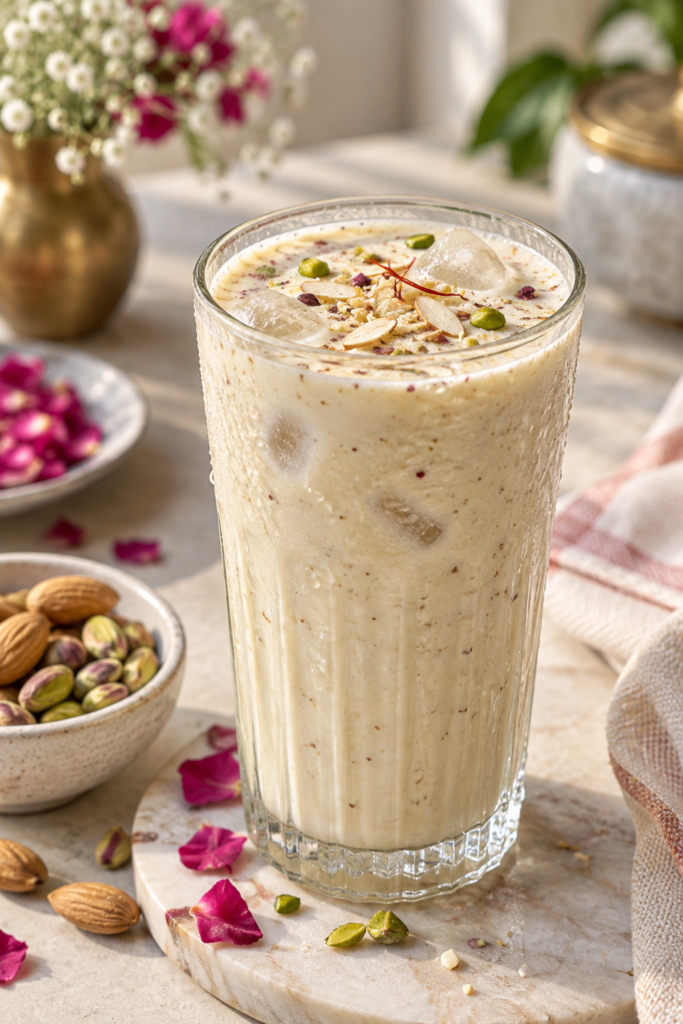
Traditional Thandai—A Drink Close to My Heart
Some recipes are special not only because of how they taste, but also because of the memories attached to them. This traditional Thandai is one of those recipes for me.
When I was younger, I used to prepare it for my father during the hot summer months. I made it the traditional way, patiently grinding the soaked almonds, seeds and spices in a mortar and pestle. My father loved this cooling drink, and seeing him enjoy something I had prepared always made me happy.
Even today, the flavour and aroma of freshly prepared Thandai bring back those precious memories. That is why this recipe will always hold a very special place in my heart.
Unlike instant Thandai powders, this homemade version is prepared with real nuts, seeds and aromatic spices. The ingredients are slowly ground into a smooth paste, allowing their natural oils and flavours to blend beautifully with the chilled milk.
The result is a creamy, fragrant and deeply refreshing drink—perfect for Ramadan, warm afternoons or whenever you need something cooling and nourishing.
What Is Thandai?
Thandai is a traditional milk-based drink made with soaked nuts, seeds and aromatic spices. The word thandai comes from thanda, meaning “cool,” because the drink is traditionally enjoyed for its cooling and refreshing qualities.
In many Pakistani homes, particularly in Punjab, a similar drink is also known as Sardai. Traditional Sardai is often prepared by grinding the ingredients by hand in a stone or metal mortar called a kundi, using a heavy pestle known as a danda.
This slow grinding method releases the natural oils from the almonds and seeds, giving the drink a richer flavour and creamier texture.
Why You’ll Love This Thandai
- Naturally cooling and refreshing
- Made with wholesome nuts, seeds and spices
- Free from artificial flavours and Thandai powder
- Creamy without being overly heavy
- Perfect for summer and Ramadan
- Can be sweetened according to your preference
- Prepared using a traditional family method
- Easy to make ahead and serve chilled
Ingredients You’ll Need
Almonds
Almonds give Thandai its creamy body and a delicate nutty flavour. Soaking them softens the nuts and makes them easier to peel and grind.
Poppy Seeds
Poppy seeds add richness and help create the characteristic creamy texture of traditional Thandai. Soak them well before grinding.
Melon Seeds
Melon seeds, also known as char magaz, contribute a mild nutty flavour and make the drink more nourishing.
Fennel Seeds
Fennel seeds add a naturally sweet aroma and a refreshing flavour that balances the richness of the milk and nuts.
Black Pepper
A small amount of black pepper adds gentle warmth and prevents the drink from tasting overly sweet. It should remain subtle rather than spicy.
Green Cardamom
Green cardamom gives Thandai its beautiful traditional fragrance. Use freshly removed cardamom seeds for the best flavour.
Milk
Use full-fat chilled milk for a rich and creamy Thandai. You can use reduced-fat milk if you prefer a lighter drink.
Sugar
Add sugar according to your taste. The quantity can be reduced, or you can use honey for a naturally sweetened version.
Rose Water
A small amount of rose water adds a gentle floral aroma. Avoid using too much, as it can overpower the other flavours.
How to Make Traditional Thandai
1. Soak the Nuts and Seeds
Place the almonds, poppy seeds, melon seeds and fennel seeds in separate small bowls or together in one bowl.
Cover them with enough water and leave them to soak for at least 4–6 hours. For easier preparation, you can soak them overnight.
2. Peel the Almonds
Drain the soaked ingredients. Gently press each almond between your fingers to remove its skin.
Peeling the almonds gives the finished Thandai a smoother texture and lighter colour.
3. Grind in a Kundi-Danda
Place the soaked almonds, seeds, black pepper and cardamom seeds in a clean mortar.
Begin grinding them with the pestle, adding a few drops of water whenever the mixture becomes too dry.
Continue grinding patiently until the ingredients form a fine, creamy paste. Scrape the sides of the mortar occasionally so that everything is ground evenly.
This traditional grinding process takes time, but it releases the oils and aromas of the ingredients beautifully.
4. Mix With Milk
Transfer the prepared paste to a large jug. Add a small amount of chilled milk and stir thoroughly to loosen the paste.
Gradually pour in the remaining milk while stirring continuously.
5. Strain the Thandai
For a smoother drink, strain the mixture through a fine-mesh sieve or clean muslin cloth.
Press the ground mixture firmly with the back of a spoon to extract as much flavour and milk as possible.
If you enjoy a slightly textured Thandai, you can leave it unstrained.
6. Sweeten and Chill
Add sugar or honey according to your preferred level of sweetness. Stir in the rose water.
Refrigerate the Thandai for at least one hour so that it becomes properly chilled and the flavours have time to blend.
7. Serve
Stir the Thandai before serving. Pour it into glasses over a few ice cubes and garnish lightly with sliced almonds, pistachios or a few saffron strands.
Serve immediately while cold and refreshing.
Bushra’s Tips for the Best Thandai
- Soak the nuts and seeds thoroughly so they become easier to grind.
- Add water only a few drops at a time while grinding.
- Grind patiently until the mixture is as fine as possible.
- Use freshly opened cardamom pods for a stronger aroma.
- Do not add too much black pepper or rose water.
- Use properly chilled milk for the most refreshing result.
- Adjust the sweetness after mixing the paste with milk.
- Allow the prepared Thandai to rest in the refrigerator before serving.
- Stir it well before pouring because some of the ground ingredients may settle at the bottom.
Traditional Kundi-Danda Method vs Blender Method
A blender makes Thandai faster, but the traditional mortar-and-pestle method produces a more aromatic and authentic drink.
Grinding the soaked ingredients slowly releases their natural oils without heating them excessively. This creates a richer flavour and a more satisfying homemade texture.
For me, the traditional method is also part of the recipe’s emotional value. It is the same patient process I followed when preparing Thandai for my father, and that memory is something an electric blender cannot recreate.
Naturally Sweetened Thandai
For a naturally sweetened version, replace refined sugar with honey. Add the honey only after mixing the ground paste with chilled milk.
You can also use soaked dates, but they will slightly change the traditional colour and flavour of the drink.
Remember that honey is still a source of sugar, so add only as much as needed.
Serving Suggestions
Traditional Thandai is best served thoroughly chilled. It makes a refreshing drink for:
- Hot summer afternoons
- Ramadan iftar
- Family gatherings
- Eid celebrations
- Weekend brunch
- Outdoor lunches and picnics
Serve it with light savoury snacks such as pakoras, samosas, chaat or sandwiches.
Storage Instructions
Store prepared Thandai in a clean, covered glass bottle or jug in the refrigerator for up to 2 days.
The ground ingredients may settle at the bottom during storage, so shake or stir the drink thoroughly before serving.
Do not leave milk-based Thandai at room temperature for an extended period, particularly during hot weather.
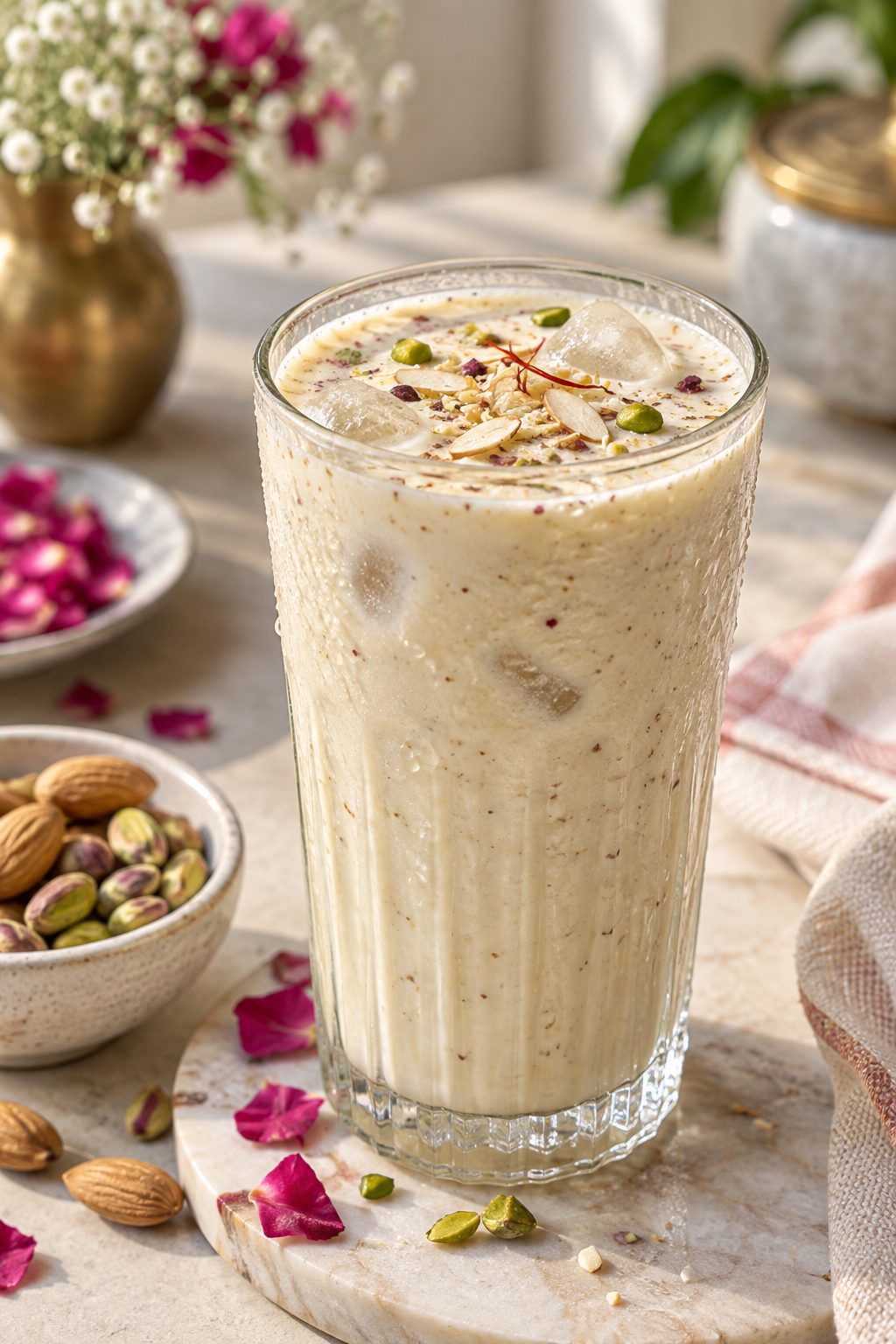

Traditional Thandai (Sardai)
Ingredients
Method
- Place the almonds, poppy seeds, melon seeds and fennel seeds in a bowl. Cover with water and soak for 4–6 hours or overnight.
- Drain the soaked ingredients and peel the almonds.
- Transfer the soaked ingredients to a mortar. Add the black peppercorns and cardamom seeds.
- Grind everything with a pestle, adding a few drops of water when needed, until a fine and creamy paste forms.
- Transfer the paste to a large jug and mix it with a small amount of chilled milk.
- Gradually add the remaining milk, stirring continuously.
- Strain the mixture through a fine sieve or muslin cloth for a smoother consistency.
- Add sugar and rose water. Stir until the sugar dissolves completely.
- Refrigerate for at least one hour.
- Stir well and pour over ice cubes. Garnish lightly with almonds, pistachios and saffron before serving.
Notes
- Adjust the sugar according to your taste.
- Add water sparingly while grinding the soaked ingredients.
- Straining is optional if you prefer a slightly textured drink.
- Keep the prepared Thandai refrigerated and consume it within two days.
- For a naturally sweetened version, replace the sugar with honey.
Frequently Asked Questions
Is Thandai the same as Sardai?
The names are often used interchangeably. In many Pakistani and Punjabi homes, this traditional cooling drink is commonly called Sardai.
Can I make Thandai without a blender?
Yes. Traditionally, the soaked nuts, seeds and spices are ground using a mortar and pestle. This recipe follows the same authentic method.
Do I have to strain Thandai?
Straining is optional. Strain it if you prefer a smooth drink, or leave it unstrained for a more rustic texture and additional fibre.
Can I prepare it in advance?
Yes. Thandai can be prepared several hours in advance and refrigerated until serving. Chilling also gives the flavours time to develop.
Can I make it without sugar?
Yes. You can leave it unsweetened or add a moderate amount of honey according to your taste.
Why should almonds be peeled?
Peeling soaked almonds creates a smoother paste and prevents almond skins from affecting the colour and texture of the drink.